Sunday, October 25, 2015

Wax On, Wax Off: Anything You Can Say I Can Say Nether

1) In "awaywithwords: On the Possibilities in Unavailable Designs," Anne Frances Wysocki extols the virtues of navigating and discovering "unavailable designs." "Unavailable designs," Wysocki suggests, are those that "have been rendered unavailable by naturalized, unquestioned practice" (304), so the sorts of foundational elements of composing, like the "color of paper and technologies of print typography" (302), that have remained innocuous or salient to existing composing practices.


Wysocki's general approach to composition resonates with me insofar as she treats "conventionalized design" in more nuanced ways, I feel, than some of the other theorists we have read up to this point. While theorists like Shipka and Alexander & Rhodes hark to compelling and important opportunities for granting "analytic primacy" to mediated action and resisting the ways in which composing has been effectively hijacked or "colonized" by traditional compositional frameworks, respectively, these approaches in some ways (inadvertently, of course) remain so committed to interrogating and problematizing text-based composing that they perhaps underestimate the extent to which all modalities (not just technologies of print technology) are fundamentally prescriptive according to the ways in which "available designs" have been socially, culturally, and historically constructed.

That being said, this raises questions about the sort of responsibility we assume as instructors in pushing back against the infrastructures of all or some of the modalities in which our students are composing. In composing my own final project, I will have to really consider not just the relationship between and among the modalities I am using, but also the specific ways in which I may or may not be altering the proverbial landscape of each of said modalities through my purportedly unique and personalized applications or practices.

2) In "The Rhetorical Work of Multimedia Production Practices: It's More than Just Technical Skill," Jennifer Shappard juxtaposes the prospects for imparting technical skills to students engaging in multimedia production against helping to facilitate the development of diverse and significant literacies. In so doing, Sheppard seeks to showcase the ways in which multimedia production is a meaningful, dynamic, and iterative process through which students (as composers) learn to be sensitive to and aware of "technological rhetorical considerations," considerations that must be navigated carefully and consciously, in order to participate in and "interact with the world in thoughtful, informative, and persuasive ways" (403).

Sheppard's efforts to expand (and honor) the scope of what constitutes multimedia production beyond the realm of mere "technical skills" interest me immensely because they begin to drive at the sorts of challenges and obstacles that inhere in activities, assignments, and major inquiry projects that ask students to not only navigate a particular rhetorical situation but to do so in genres and media that exacerbate the rhetorical demands and expectations that are placed on them as composers.


By design, all of the theorists we have read up to this point share Sheppard's philosophy in terms of honoring the rich and rigorous set of rhetorical choices that students (as composers) make in the course of multimedia production. What distinguishes Sheppard, though, is her commitment to sharing the theoretical promise of multimedia production and its "technological rhetorical considerations" with administrators and colleagues.

My final project is predicated on surveying the landscape of students' previous experiences and preference with regard to being required to use mobile devices to complete in- and out-of-class course activities, so Sheppard's approach to multimedia production will likely play an important role in how I represent my findings from the questionnaire I am distributing to students in writing-intensive courses. Indeed, the questionnaire is designed in some ways to better understand how students are internalizing the instructions and technologies instructors are explicitly (or implicitly) prescribing to students in their activities, assignments, and major inquiry projects, which will hopefully help speculate about the role that both "technical skills" and "technological rhetorical considerations" play in terms of the work that they compose.

3) In "Composing for Recomposition: Rhetorical Velocity and Delivery," Jim Ridolfo and Dànielle Nicole DeVoss explore the extent to which considerations of delivery have infiltrated conversations and practices of rhetoric in digital spaces. Ridolfo and DeVoss are particularly interested in what they dub, "rhetorical velocity," a term that drives at the speed at which content that is delivered digitally is actually re-mixed and appropriated in many ways by users in their efforts to communicate their own compositions, compositions that re-work components of existing compositions and extend them to new (and perhaps unintended) contexts or communicative landscapes. "Rhetorical velocity" is significant, they argue, because composers are responding in particular ways to the prospect of such re-mixing and appropriating.


Ridolfo and DeVoss' ideas are important to keep in mind in terms of the ways in which we theorize and define production and composition. I was reminded in many ways of Kress and van Leuwen's attempt to articulate a schema for multimodality in Multimodal Discourse: The Modes and Media of Contemporary Communication. Kress and van Leuwen design their schema to speak to the unique and personalized ways that composers actually enrich existing debates and conversations about communicative action in the ways that they navigate and acknowledge matters of discourse, design, production, and distribution, in the course of developing and delivering content. Yet, as we discussed issues of distribution in class, it was difficult not to gesture to the prospects for re-mixing and/or appropriating in varying degrees of heavy-handedness. Which is to say, militating (and/or guarding) against efforts to extend existing content into new (and perhaps unintended) contexts can only go so far, even if these efforts include severe legal implications.

Ridolfo and DeVoss' notion of "rhetorical velocity" was incredibly interesting to me in terms of considering ways in which I might invite re-mixing and/or appropriation in the content I compose for my final project. I wonder, too, whether calling direct attention to these opportunities will cheapen or somehow delimit the transgressive potential embedded in users' efforts to extend existing content into new (and perhaps unintended) contexts of their own choosing.

Monday, October 12, 2015

Composer <===> Audience: Communication, or the Twice-Social-Semiotic Exchange

In the first half of Multimodality: A Social Semiotic Approach to Contemporary Communication, Gunther Kress attempts to articulate a "social-semiotic theory of multimodality" through which composers and audiences might make productive distinctions between design practices, insofar as they do or do not promote "competence," on the one hand, or "critique," on the other. For Kress, the current media and communication landscape is far less stable and immutable than previous generations. The act of meaning-making therefore requires composers and audiences alike to navigate and respond to differing distributions of power. In so doing, the composer's interests are juxtaposed alongside those of their audience, therefore creating important spaces in which knowledge can be produced as opposed to merely acquired.

Kress' emphasis on the prospects for producing and/or fashioning knowledge is integral to understanding his overall project in Multimodality. Indeed, his entire schema seems predicated on the idea that the rhetorical choices that both composers as well as audiences make in the course of their representative and interpretative acts, denote or communicate a sort of agency and style that is indispensable to understanding the scope and tenor of the ways in which social spaces might produce communicational and semiotic change at the level of culture and identity politics. Leaving the possibility for this sort of negotiation open, then, accentuates the ways in which both composers as well as audiences might circumvent the "grooves of convention" and perhaps even realize the political and semiotic aspirations of their communicative acts. In so doing, the semiotic work that they engage in serves as a potent and realistic forum through which to re-think the existing epistemologies and ontologies that comprise communication writ large.

Monday, October 5, 2015

Affordances and Limitations of Culture and/as Affordances and Limitations of Media

A Summary
In Multimodal Discourse: The Modes and Media of Contemporary Communication, Gunther Kress and Theo Van Leeuwen attempt to articulate a set of "common semiotic principles [that] operate in and across different modes" (2). Their focus on multimodal practices is significant insofar as it accentuates the unique and personalized ways in which composers actually enrich existing debates and conversations about communicative action in the ways that they navigate and acknowledge matters of discourse, design, production, and distribution, in the course of developing and delivering content. This approach, however, is as much concerned with the affordances and limitations that comprise various modes and media as the affordances and limitations imposed by particular cultures.

A Synthesis
As a great deal of my reading of Gunther Kress and Theo Van Leeuwen's Multimodal Discourse: The Modes and Media of Contemporary Communication resonated with many of the ideas articulated in previous readings this semester, I felt it might be productive at this stage in the semester, to briefly touch on some of these resonances. Throughout Multimodal Discourse, Kress and Van Leeuwen comment on the changing landscape of communicative action, a landscape in which the seemingly exclusive and predominant practice of monomodality has been demystified in favor of a more fluid and variable landscape in which one can and does manipulate the semiotic components and mediational means available to them. In so doing, Kress and Van Leeuwen, like Jody Shipka in A Composition Made Whole, grant "analytic primacy" to mediated action, a move that very much extols the virtues of the profound rhetorical and cultural work accomplished by the "individual-interacting-with-mediational-means." Yet, for Kress and Van Leeuwen and Shipka, as well as for Jonathan Alexander and Jacqueline Rhodes in On Multimodality, placing an emphasis on the scope and breadth of mediated action and multimodal practices requires a more nuanced understanding of the "specific sociocultural contexts, bounded by intricacies of location, access, ability, and ideology," through which the mediational means emerge and acquire meaning. Without this sort of contextualized approch, Kress and Van Leeuwen remind us, we risk undermining and occluding the very real and profound ways in which composers add to the existing repertoire of available "grammars of design."

Monday, September 28, 2015

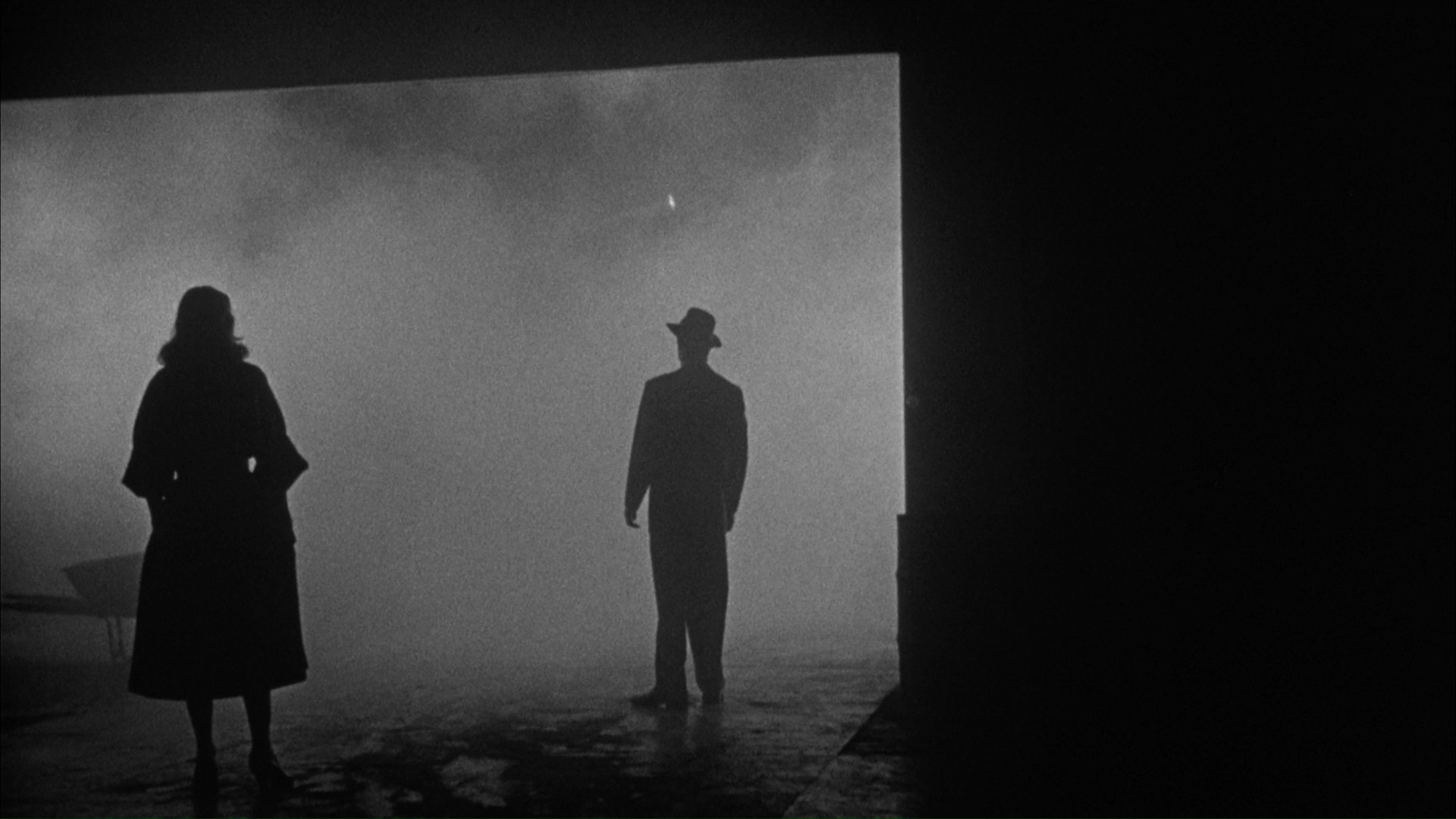
The Ontologies of Microsoft Word: A Noir Storyboard with Captions

He knew something was up when it told him "interpellate" isn't a word.
He didn't know who it was that was underlining all of those "misspelled" words . . .
who it was that was lurking in the shadows, equal parts architect and gatekeeper, correcting and disciplining . . .


but he knew there had to be a reason they preferred that he use "interpolate" . . .


in lieu of using "interpellate."

Whatever their reasons, he knew he didn't trust them . . .

 but he also knew that no matter how hard he tried to get away . . .
 
 or defer to someone or something else . . .


they would be there, waiting.

He knew this was about more than just words, though . . .

that it was about more than just being followed or corrected or disciplined.

He began to wonder who he was in relation to them . . .

 and who they wanted him to be.

He wondered how he could be in the driver's seat . . .

 how he could manage to work within the constraints they imposed and possibilities they offered while realizing some semblance of the identity and message he sought to deliver all the while.

 And even if that identity and that message weren't exactly what he expected or desired . . .

 at least he came away from it all with a better understanding of the figure in the shadows . . .

and the network of affordances and limitations he was working in as he composed his life in this place.


Reflections on "The Ontologies of Microsoft Word: A Noir Storyboard with Captions":
 
In A Composition Made Whole, Jody Shipka discusses the ways in which representational systems and technologies outside or supplemental to the purview of textual production tend to be undervalued, derided, and/or ridiculed as playful, uncritical, and unsophisticated gestures that merely distract from the "real work" of higher education. Shipka places a great deal of emphasis on having compositionists work to facilitate an understanding of the "complex ways that texts come to be," a habit of mind that celebrates the “complex and highly distributed processes associated with the production of texts" (13). In my multimodal representation, I sought to elucidate the process by which texts are produced by harking to moments where users might work with writing technologies, like Microsoft Word, and bump up against the affordances and limitations of the medium they’re working in when they attempt to convey meaning. I represented all of this through the Noir genre, because it underscored the insidious, elusive, and mysterious character of the unique affordances and limitations that comprise mediational means and their capacity to become naturalized, common, and neutral without adequate critical attention. The shadowy figure that hangs over efforts to convey meaning like a specter serves as a reminder of the constraints that all media impose. Though this shadowy figure cannot necessarily be done away with entirely by users, like Shipka, I attempt to extol the virtues of creatively and critically navigating these obstacles by representing this particular user as a prospective "individual-interacting-with-mediational-means," a user who is beginning to form a sort of media ecology around their nascent understandings of the network of affordances and limitations they are working in when using a particular medium.

(Re) Mediating Composition: The Case for Sociohistorical and Contextualized Approaches to First-year (Multimodal) Composition

In Toward a Composition Made Whole, Jody Shipka articulates a "mediated action framework" through which compositionists might rethink the epistemological and ontological underpinnings of traditional composition pedagogies, in order to speak more directly to the demands that inhere in the growth of available and existing technologies and the virtues of facilitating the sort of rhetorical and material awareness that might help students negotiate situations and contexts that may or may not lie within the narrow confines of curricular environments. The "individual-interacting-with-mediational-means" serves as the protagonist of Shipka's "mediated action framework," a sort of "promiscuous" figure who extols and performs the virtues and meaning-making potentialities of various representational systems and technologies, systems and technologies that are ultimately not restricted to or defined by strict textual production. In so doing, Shipka productively re-hashes debates and conversations within composition studies about distinctions between product- and process-oriented approaches to the work that students do in the classroom.

Despite the sorts of mandates and expectations that inhere in these debates and conversations, though, by design the "mediated action framework" does not neatly or conveniently align itself with one camp or another, it seeks in many ways to problematize efforts to "too quickly dismiss the highly purposeful and rigorous dimensions of unfamiliar-looking texts." This move, Shipka goes on to suggest, "involves directing . . . attention away from the look, sound, or feel of a final product and toward a consideration of that product in relation to the complex processes composers employed while producing that text" (134). By granting "analytic primacy" to mediated action, then, she does not so much endeavor to frame either a product- or process-oriented approach as much as demystify this binary and, perhaps more important, unmoor traditional composition pedagogies from the sorts of prescriptive and uncritical postures that seem to comprise strict textual production.

Unilaterally determining the choices and contexts and situations and tools that are available to students, in this sense, merely provides students with a "highly decontextualized skills and drills, linear, single-mode approach to writing instruction" rather than one that "offers participants . . . a richer and more intricately textured understanding of how communicative practices are socially, historically, and technologically mediated" (85). Shipka's "mediated action framework," therefore, places more of the onus and responsibility on students themselves to navigate the complex and dynamic miasma of variables that serve as both affordances and limitations to the manner in which they invent, compose, deliver, and revise their approaches to projects. Ultimately, the goals associated with the "mediated action framework" have less to do with "pleasing the teacher" or arbitrarily "doing whatever one feels like doing," than helping students "learn to view tasks as problems, the solutions to which must be carefully negotiated" (106).

I know my question for Jody Shipka is coming in a bit late, seeming as how class is today, but it really has/is taken/taking me some time to really digest all of the ideas in A Composition Made Whole. There are so many parts of what I read that resonated with my larger research interests in conceptualizing Cuban digital literacies and understanding DIY cultures that I spent much of my time scrawling "CUBA" and "DIY" in the margin and trying to find points of convergence between the composition pedagogies I aspire to and my continued work in the aforementioned areas. I hope that the question that follows begins to drive at the sorts of intersections and nuances that I am at least attempting to flesh out and actualize in all of the work I do.

Throughout A Composition Made Whole, you call for "a richer and more intricately textured understanding of how communicative practices are socially, historically, and technologically mediated" (85). This implies that the sociohistorical aspects of students' unique and personalized composing processes ought to remain central to their understandings and articulations of the work they do throughout the semester. While the "Lost and Found" (LF) task seems to express some sensitivity towards limiting the added economic pressures that students incur as they navigate assignments and course activities that in many ways require them to purchase or acquire additional materials, I found myself wondering about the role that "critical consciousness" and "prosumerism" ought to play as students invent, compose, revise, and deliver their projects. This is not to say that there are necessarily "ideal" or requisite conditions in which "critical consciousness" and "prosumerism" can or should take place; rather, I guess I am asking how we as compositionists might continue to make them more central as we construct multimodal assignments and curricula.

Monday, September 21, 2015

Re-mixing Multi-modality

Below you will find a link to the Prezi that Sam Herriot, Lacy Hope, and I composed last week in response to our reading of Jason Palmeri's Remixing Composition: A History of Multimodal Writing Pedagogy.


Later in this post, I will look to revise this Prezi in order to integrate Jonathan Alexander and Jacqueline Rhodes' ideas from On Multimodality: New Media in Composition Studies into a sort of layered multimodal response that weaves both texts together.

In On Multimodality, Alexander and Rhodes problematize existing applications of multimodality in composition studies, exploring many of the problematic and reductive ways in which multimodal composition has been both theorized and extended to the classroom in the past. For Alexander and Rhodes, multimodal pedagogies remain rather flat and almost formulaic insofar as they seem to disregard the breadth of rhetorical capabilities and affordances that comprise the media in which compositionists ask students to compose in favor of narrow iterations of multimodal composition that seem to perpetuate (rather than challenge) standard print-based literacies and practices. In this sense, multimodal composition is effectively hijacked or "colonized" by traditional compositional frameworks, frameworks that filter technologies, new media, and literacy practices through a sort of crucible of textual communication. Which is all to say that seemingly innocent (even transgressive) "techno-inclusionist" attempts to integrate new media and multimedia projects into the composition classroom ultimately undermine efforts to realize the prospects for agency, advocacy, and/or informed subjectivity if compositionists do not take the time to prepare students "to take full advantage of the specific rhetorical affordances of the media they are using" (19).

Alexander and Rhodes therefore seek to articulate a theory and practice of multimodal composition that looks beyond narrow conceptualizations of new media as a mere tool or thrall at the altar of traditional composition, a one-dimensional vacuum in which "appropriate and productive uses" might be unilaterally imposed or determined; rather, they seem to suggest that the virtues of multimodal composition are best realized when students (and everyone for that matter) understands the extent to which their unique and personalized uses of different modalities--whether in isolation or in conversation with one another--take place in and around "specific sociocultural contexts, bounded by intricacies of location, access, ability, and ideology" (34). In many ways, the will to contextualize serves as the coda through which Alexander and Rhodes' vision of multimodal composition can be understood. Indeed, much of On Multimodality seems committed to interrogating the myriad ways in which the dynamic interplay of new media and identity politics continue to rework and transform notions of ethos and subjectivity in ways that really demand more sensitive, concerted, and comprehensive approaches to multimodal composition, approaches that are more in touch with the critical and rhetorical possibilities of new media and the "soft infrastructure," so to speak, of the interfaces and ideologies that students might creatively navigate and manipulate as a way of interrogating the discursive underpinnings of identity in an increasingly multimodal "world."

Monday, September 14, 2015

Re-miiiiiiiiiix, or "Where I'm Calling From"

As I was reading Jason Palmeri's Remixing Composition: A History of Multimodal Writing Pedagogy, I realized something very important about my relationship to composition studies: namely, that I've reached a point in my young academic career where I'm clamoring to define "where I'm calling from," as Raymond Carver would have it, where I'm grasping for a pedagogy (or pedagogies) that in some way, shape, or form symbiotically match up to my general research interests in identity politics, digital literacies, political economy, and social justice. Throughout Remixing Composition Palmeri speaks to so many of the unanswered questions and stultifying anxieties that have comprised my efforts to integrate multimodal composing into my pedagogies while remaining committed to inclusivity, situated learning, and, perhaps most important, rhetorical theory and practice.

For Palmeri, "the study and teaching of multimodal composing must necessarily be an interdisciplinary endeavor" (155). Though effectively extolling the virtues (and, of course, the necessities) of approaching multimodal composing in an interdisciplinary manner and collaborating with scholars in different disciplines to study the creative process, he also makes it a point to articulate the specific ways in which compositionists might contribute to conversations about writing and education reform. By juxtaposing misguided and one-dimensional efforts to simply "teach students to become professional 'new media' producers" against the creative and productive tension that inheres in pedagogies that "engage [students] in reflectively considering how theories of rhetoric and process can travel across modalities" (153), Palmeri elucidates upon and appeals to a brand of multimodal composition that effectively and fervently contests "the rigid compartmentalization of knowledge in the modern university" (132). Indeed, much of what Palmeri discusses in Remixing Composition seems predicated on the notion that "considerations of new media should not be left to 'computers-and-writing' or 'technical communication' specialists alone" (94), a claim that he supports by framing multimodal composition as a practice (or practices) entrenched in the need to acquire dynamic understandings of audience and purpose and a recognition of the affordances and limitations of various media and genres.

Yet, what I found most compelling and important about Palmeri's project in Remixing Composition, was his general commitment to answering the enthusiasm and supposed liberatory potential of multimodal composition with an important challenge to the "field's tendency to fetishize 'new' technologies," a move that he suggests, "problematically works to reinforce racist and colonialist narratives of progress" (12). In this sense, efforts to locate "transferable composing skills" that speak to school, civic, and workplace contexts are always tempered by a call for trepidation, a call for teaching methodologies that integrate matters of racism, classism, sexism, and so forth into the very infrastructure of multimodal composition pedagogies. This seeming call for teaching methodologies resonates with me, because it accentuates multivalent issues of access, literacy, social justice, and stakeholders, not as an after-thought or sub-section to multimodal composition theory and practice but as the very metric by which compositionists organize and students engage with assigned/required technologies, course content, and major inquiry projects.

Questions for Jason Palmeri about Remixing Composition

1) Much of Remixing Composition seems to extol the virtues (and historical precedents in the field) of compositionists being promiscuous, so to speak, in their efforts to form multimodal composition pedagogies around productive intersections between composition and the allied arts. You even go so far as to say that "considerations of new media should not be left to 'computers-and-writing' or 'technical communication' specialists alone" (94). As English departments (or universities), like that of WSU, continue to maintain and/or develop rather prominent programs in digital, technology, and culture, and technical writing (courses that many instructors are granted opportunities to teach in addition to FYW) alongside their composition program, of course, how might instructors who are interested in multimodal composition go about crafting pedagogies and approaches to new media/multimedia composing in a way that will embrace the liberatory potential of multimodal composition while also remaining sensitive and hyper-aware of the different rhetorical and disciplinary demands/expectations that comprise these programs and their respective courses?

(Note: I do not necessarily ask this question with the intention of keeping these programs and courses in compartmentalized discursive and pedagogical spaces; rather, I approach this issue from the perspective of a graduate student and instructor whose research and pedagogical interests stretch across a disciplinary continuum ranging from FYW to digital, technology, and culture to technical writing (and beyond). As opportunities to teach different courses across these disciplines emerge in the future, I will certainly my enthusiasm for multimodal composition and new media/multimedia writing to the fore of my pedagogies, though I wonder, too, how I might make enough distinctions between these pedagogies where I am not simply exporting or re-tooling activities and major inquiry projects from one course to another.)

2) In Chapter 3 of Remixing Composition, you caution compositionists against "painting all young students with the same broad brush" (114) in making assumptions about their existing functional, rhetorical, and critical literacies in using new media in and around prospective classroom activities. Beyond the prospects for assigning literacy narratives and/or "video documentaries," what other measures can compositionists take to speak to the obstacles that students face with material limitations, physical or mental impairments, and/or developing literacies?

(Note: In asking this question, I don't pre-suppose that a "purified" or "all-inclusive" pedagogy exists in which all of these and other obstacles are answered; rather, I hope to gain more insight into the ways in which compositionists might better tailor their classrooms, assignments, curricula, etc. to increase the prospects for dynamic learning opportunities and robust forms of participation among the broadest, most diverse student population possible.)