Monday, April 20, 2015
In Whispers and Furtive Glances: Assessing Digital Literacies and (H)ac(k)tivism in Post-Embargo Cuba
In Whispers and Furtive Glances - Created with Haiku Deck, presentation software that inspires

Friday, April 17, 2015
Data Storage and/as "Mobile Interface Theory"?
In Mobile Interface Theory: Embodied Space and Locative Media, Jason Farman discusses the ways in which mobile technologies serve as intermediaries that help to negotiate between material and digital spaces. For Farman, mobile technologies demystify existing binary relationships between material and digital spaces insofar as they are imbued with the capacity for unique and personalized movement across contexts, therefore investing users with profound embodied possibilities.
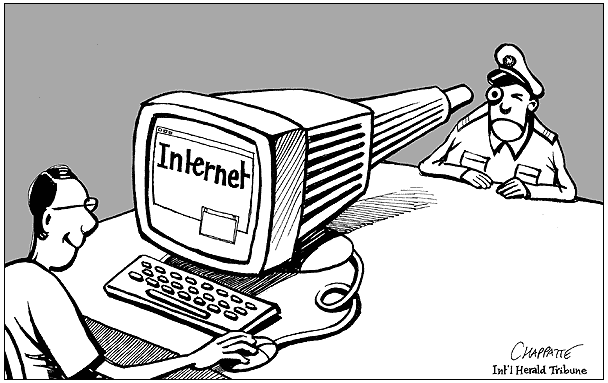 Admittedly, my current research about Cuban digital literacies has yet to really broach the emergence of mobile technologies in Cuba. That being said, it is important to address the manner in which Farman's tacit celebration of mobile technologies in Mobile Interface Theory may fall short of addressing unique cultural contexts--like Cuba--where the vast majority of Cuban citizens either do not have access to digital spaces or they are subjected to a level of surveillance and restriction that actively prevents them from seeking out sources that conflict with the Cuban government's ideological apparatus. Cubans, in this sense, are less concerned with reconciling material and digital spaces--as Farman suggests mobile technologies might accomplish--than merely gaining access to digital spaces and locating Cuba and its cultural heritage within a more global context.
 Interestingly enough, though, over the last several years Cubans have taken advantage of advancements in data storage--namely, thumb drives--to facilitate data transfer of sources that would otherwise be unavailable to users on the Internet. In so doing, they have mitigated many of the restrictions imposed by the Cuban government on prospective users while delivering content freely and ubiquitously to more and more Cubans who would have otherwise not had the level of access or the resources to receive and engage with such content.
 In gesturing to the prospects for data storage to actively circumvent existing restrictions to digital spaces in Cuba, this raises important questions about what constitutes a mobile technology or a mobile interface. It also highlights the ways in which the scope or Farman's notion of "mobile interface theory" may be limited or hampered by assumptions that distinctions between material and digital spaces may be uniformly exported to different social, cultural, and political contexts. Of course, expanding "mobile interface theory" to include data storage and the like may at the very least begin to speak to a multitude of different contexts, but this is just one example in one context.
Admittedly, my current research about Cuban digital literacies has yet to really broach the emergence of mobile technologies in Cuba. That being said, it is important to address the manner in which Farman's tacit celebration of mobile technologies in Mobile Interface Theory may fall short of addressing unique cultural contexts--like Cuba--where the vast majority of Cuban citizens either do not have access to digital spaces or they are subjected to a level of surveillance and restriction that actively prevents them from seeking out sources that conflict with the Cuban government's ideological apparatus. Cubans, in this sense, are less concerned with reconciling material and digital spaces--as Farman suggests mobile technologies might accomplish--than merely gaining access to digital spaces and locating Cuba and its cultural heritage within a more global context. Interestingly enough, though, over the last several years Cubans have taken advantage of advancements in data storage--namely, thumb drives--to facilitate data transfer of sources that would otherwise be unavailable to users on the Internet. In so doing, they have mitigated many of the restrictions imposed by the Cuban government on prospective users while delivering content freely and ubiquitously to more and more Cubans who would have otherwise not had the level of access or the resources to receive and engage with such content.
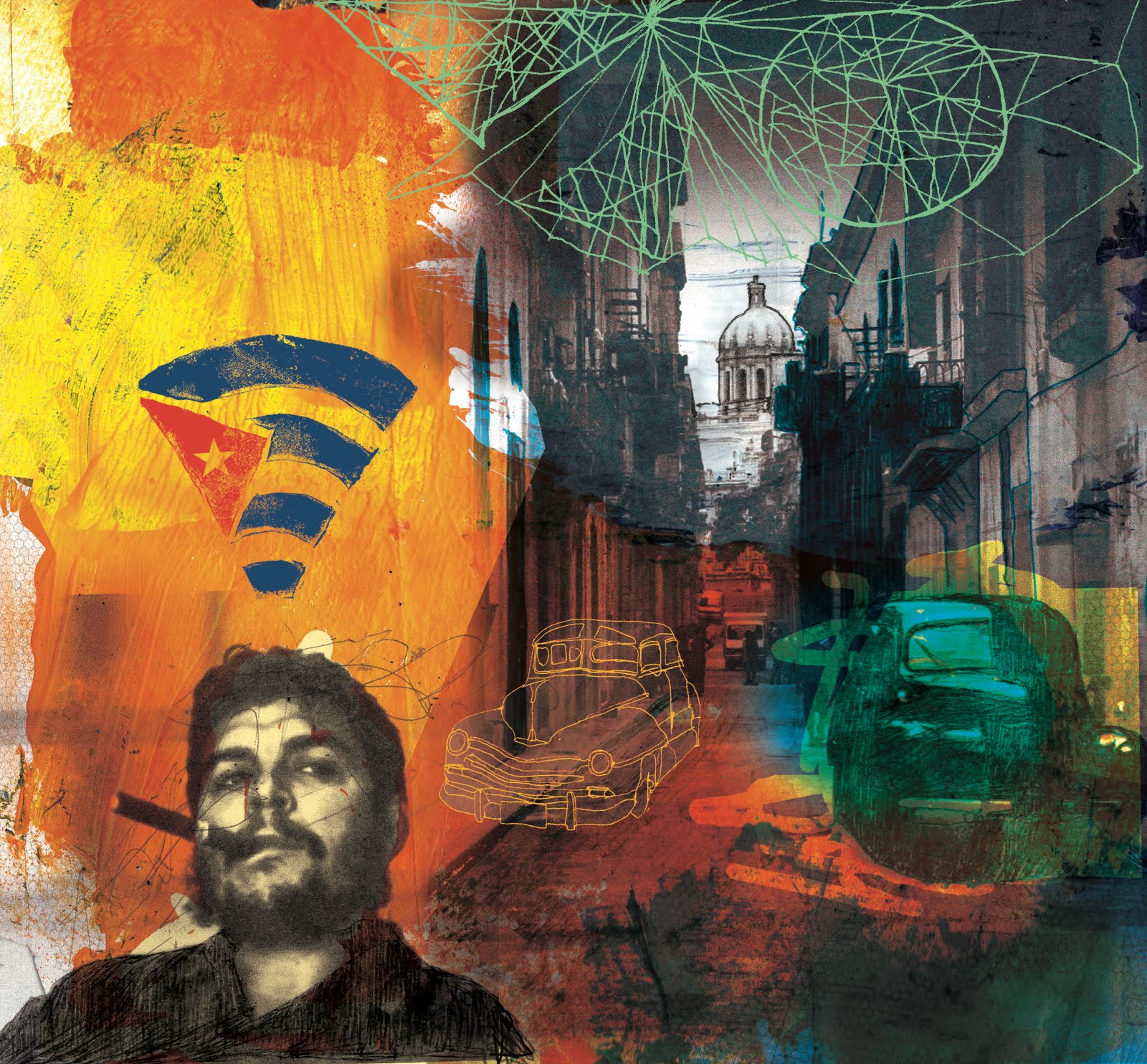 In gesturing to the prospects for data storage to actively circumvent existing restrictions to digital spaces in Cuba, this raises important questions about what constitutes a mobile technology or a mobile interface. It also highlights the ways in which the scope or Farman's notion of "mobile interface theory" may be limited or hampered by assumptions that distinctions between material and digital spaces may be uniformly exported to different social, cultural, and political contexts. Of course, expanding "mobile interface theory" to include data storage and the like may at the very least begin to speak to a multitude of different contexts, but this is just one example in one context.
Saturday, April 11, 2015
Some New Directions in My Project on Cuban Digital Rhetorics
This passed week, I've had a number of conversations and discoveries that have really helped me further develop the digital humanities project I've been working on the past few months. In a brief conversation with Matt Frye about his own research he mentioned the term, "leapfrogging." "Leapfrogging" communicates the idea that areas that have not developed "stable" or "up-to-date" technological and economic infrastructures might rapidly move themselves forward through the adoption of contemporary systems without going through a series of intermediary steps of development. With purveyors of hardware, technology, telecommunications, etc. lining up to "update" Cuba's existing technological infrastructure in the wake of an agreement between President Obama and Raul Castro to relax trade and travel restrictions between the U.S. and Cuba,
Cuba purportedly stands to experience an unprecedented amount of growth in terms of material access, or at the very least an influx of material contexts in which users could perhaps own or operate digital technologies and participate as users on the Internet and Web 2.0. This "influx of material contexts" is very important to keep in mind given the various economic realities and debilitating restrictions imposed on Cuban citizens attempting to own or operate digital technologies regardless of the setting in which such use actually takes place. Indeed, according to a recent Bendixen & Amandi Poll for Univision Noticias - Fusion in collaboration with The Washington Post, it was reported that only 16% of Cubans living in Cuba have access to the Internet. And while these poll results might lead some to simply assume that Cubans living in Cuba as a whole would stand to benefit from a surge in material access, it is still important to keep in mind the manner in which the aforementioned economic realities and restrictions have tempered the use of digital technologies and the Internet in profoundly different ways for various populations.
In the past couple of years, Roots of Hope, an organization comprised of students and young professionals seeking to empower youth in Cuba to become authors of their own futures, have organized events in which computer programmers and coders from all over the globe are invited to explore the prospects for combating Internet restrictions in Cuba and to develop ideas, applications, and "innovative technology solutions" that speak directly to the existing hardware, literacy, and access limitations that serve as the foundation for the relationship between Cuba and technology.
These are very important contexts for me to consider as I move forward with my project in the digital humanities, in that they challenge me to re-consider the approach I am taking to the notion of digital rhetorics among Cubans living in Cuba. With all of these and more interested parties vying to enter the conversation around Cuba's digital and telecommunications future, I remain focused on how we might imagine and enact these futures in conversation with Cubans living in Cuba themselves.
Cuba purportedly stands to experience an unprecedented amount of growth in terms of material access, or at the very least an influx of material contexts in which users could perhaps own or operate digital technologies and participate as users on the Internet and Web 2.0. This "influx of material contexts" is very important to keep in mind given the various economic realities and debilitating restrictions imposed on Cuban citizens attempting to own or operate digital technologies regardless of the setting in which such use actually takes place. Indeed, according to a recent Bendixen & Amandi Poll for Univision Noticias - Fusion in collaboration with The Washington Post, it was reported that only 16% of Cubans living in Cuba have access to the Internet. And while these poll results might lead some to simply assume that Cubans living in Cuba as a whole would stand to benefit from a surge in material access, it is still important to keep in mind the manner in which the aforementioned economic realities and restrictions have tempered the use of digital technologies and the Internet in profoundly different ways for various populations.
In the past couple of years, Roots of Hope, an organization comprised of students and young professionals seeking to empower youth in Cuba to become authors of their own futures, have organized events in which computer programmers and coders from all over the globe are invited to explore the prospects for combating Internet restrictions in Cuba and to develop ideas, applications, and "innovative technology solutions" that speak directly to the existing hardware, literacy, and access limitations that serve as the foundation for the relationship between Cuba and technology.
These are very important contexts for me to consider as I move forward with my project in the digital humanities, in that they challenge me to re-consider the approach I am taking to the notion of digital rhetorics among Cubans living in Cuba. With all of these and more interested parties vying to enter the conversation around Cuba's digital and telecommunications future, I remain focused on how we might imagine and enact these futures in conversation with Cubans living in Cuba themselves.
Sunday, April 5, 2015
Saturday, April 4, 2015
StoryCorps, a Mobile Application and a Web site
 This past week I explored StoryCorps, a digital storytelling application designed for multiple mobile platforms (Personally, I used my Samsung Galaxy Tab 4 to navigate the application). StoryCorps allows users to conduct interviews with individuals and share them in a vast and burgeoning archive of other interviews collected within the application itself. Overall, it was relatively easy to find (I used the Google Play Store), download (It was only 37.5 MB), and sign up for (It only asks for a Username, Email, and Password, with other optional information). The interface is user-friendly and easy to navigate, with a rather simplified drop-down menu that includes just six options (including logging out). Below I will provide a brief narrative of my specific "user experience" of StoryCorps. Many of the observations that I make in my brief narrative will be expanded further when I articulate the terms of prospective pedagogical applications of StoryCorps in a DTC 101 course or otherwise.
In the "About StoryCorps" tab, they announce that their mission is to "provide Americans of all backgrounds and beliefs with the opportunity to record, share, and preserve the stories of our lives." They also indicate that interviews that are recorded with StoryCorps are preserved at the American Folklife Center at the Library of Congress. The language used throughout the application itself is exclusively English without any recognizable options for alternative language or access options.

In looking at the interviews that were archived in the "Browse" tab, I was a bit dismayed by the lack of options available for users to somehow conduct more dedicated and specific keyword searches, thus making it a bit difficult to understand or manipulate the logic of how interviews were initially organized. However, users do have the option to "like" (indicated by the heart) or "friend" (indicated by the plus sign beside the outline of a human body) other users. In this sense, users can personalize their own "People I Follow" pages, though there were no options available to comment on or interact with these same or other users on the mobile application.
 Though I did not myself conduct and record an interview with the StoryCorps mobile application, I was very much intrigued by what Melanie Kill dubs, the "hard and soft infrastructure" ("Teaching Digital Rhetoric") of the application in terms of how users are limited in many ways by the existing infrastructure and design components imposed within the platform ("hard infrastructure"), yet also offered unique and important avenues within the platform with which to carve out spaces for more personalized manipulation and agency ("soft infrastructure").
 As it stands, StoryCorps generally requires that interviewer(s) and interviewee(s) occupy the same physical space, therefore limiting interview options based on mobility and geographical proximity. While StoryCorps does provide rather extensive and generally categorized lists (ranging from "Family Heritage" to "Love & Relationships" to "War") of sample questions with which to organize and conduct interviews, they also provide options to "Write your own question" as well. What is more, after users complete their interviews they are also invited to provide a title, summary, keywords (which includes keywords that are: "General (ex. birth, marriage, war)"; tied to an "Organization (ex. TED, YMCA)"; and/or related to specific "Places (ex. Chicago, IL)"), participant information (which includes: "First Name (required)", "Last Name (optional)," and Email (optional)"), and location ("City," "State/Region/Province," and "Select Country"). Though I certainly appreciated and valued the capacity with which users might generate and include all of this sort of personalized information, it was unclear how this information could actually be used by users of the StoryCorps mobile application themselves if that information if it is neither made available for perusal in the "Browse" tab nor made searchable with any kind of search field.
Many of the limitations I've described above with regard to the lack of search options available in the StoryCorps web application vexed and gave me enough pause to the extent that I decided to visit the StoryCorps Web site itself. Without engaging in an exhaustive study of the affordances and capabilities available to users on the StoryCorps Web site, I will certainly say that it is far more complex and dynamic than its counterpart, the mobile application. For example, it offers: playlists, recording locations, programs and initiatives, and, most importantly, a search field in which users can find other interviews in accordance with their own keywords and search criteria. The distinctions that I recognized between the mobile application and the Web site really helped me to develop some provisional and half baked activities and assignments which might be used in a DTC 101 course.
While I see quite a bit of value in actually composing with StoryCorps, though, I was primarily interested in the varied levels of affordances and design features that distinguished the mobile application from the Web site. This line of inquiry is intriguing to me, because it highlights the ways in which mobile applications are not simply digital surrogates of the Web sites that they emerge from but profoundly different platforms with which to accomplish comparable tasks. Which is to say, I could certainly imagine a longer sequence of assignments that use StoryCorps, a sequence that begins at the level of "listening to" and recognizing design features and affordances between and among the Web site and mobile application and then moving to actually using the platform itself to conduct and archive interviews. With StoryCorps providing a number of sample questions that users can use in the course of their interviews, it would be valuable to have students perhaps conduct a series of interviews in which they use these sample questions for some interviews and others where they design their own questions. Having students use as well as reflect on their use of StoryCorps in these different registers would go a long way in really simulating the "hard and soft infrastructure" of the digital storytelling platform. I also see quite a bit of potential in asking students to consider the rhetorical implications of the choices they elect to make in the course of their composing the title, summary, keywords, participant information, and location. This is all food for thought, though I am sure I will continue to flesh this out in the days that come.
Monday, March 30, 2015
Answering "the why DH question": Cuban Digital Rhetorics and the Emergence of a Broader Ecology of Interactional Prospects
As I move closer and closer to composing, revising, and submitting a proposal for my digital humanities project regarding the topic of Cuban digital rhetorics, it is important to also pause at this stage in order to meditate on how and why, specifically, the digital humanities might serve as an appropriate platform for my particular project. In once again broaching the concerns, readings, and topics that emerge from existing digital humanities projects, scholarship, and pedagogies, I begin to understand that my prospective efforts to explore Cuban digital rhetorics is embroiled in the sorts of questions and conversations about language, literacy, and culture that comprise what has come to constitute the digital humanities as a deeply-sensitive and incisive platform for organizing, delivering, and welcoming content or information in digital spaces. Indeed, the aforementioned questions and conversations within my particular project crop up issues ranging from access (in all of its varieties) all the way to collaboration and critical engagement. In what follows, I hope to provide a brief and exploratory snapshot of the manner in which a majority of the primary concerns espoused within the digital humanities also inhere in the work that I aim to engage in with my own digital humanities project regarding the topic of Cuban digital rhetorics.
In order to help situate my ultimate claim that the digital humanities are ultimately indispensable to conversations about Cuban digital rhetorics, it is first important to understand the role that access and surveillance have played within interpersonal rhetorics between and among Cuban peoples inside and outside of Cuba itself. Interpersonal rhetorics are an integral context through which to analyze all of these issues because of the ongoing and general (but not complete) absence of interactional prospects between Cuban citizens and those who reside outside of Cuba. In many ways, these diverse but interrelated Cuban populations and their interactional prospects have been shaped and re-organized by revolutions, diasporas, and discontent. Having experienced at least three major waves of diasporic and migrational activity away from Cuba for various political, religious, economic, and familial reasons since the late-1950s, the Cuban population has generally experienced the sorts of fractures and traumas that problematize efforts to articulate and deliver a stable conceptualization of what constitutes Cuban identity or Cuban rhetoric writ large. Made all the more extreme by the broad and inescapable ideological underpinnings that have informed the United States governments' long-standing embargo against Cuba and the ever-palpable stink of enmity that has inhered in the relationship between these nations, interactional prospects among Cuban peoples inside and outside of Cuba have been dictated and surveilled to the extent that little or no direct or productive interaction has taken place between these Cuban populations following the aforementioned diasporic and migrational activity. Despite even the most recent and unprecedented developments within diplomatic relations between the nations, interactional prospects as a whole have remained rather limited by virtually insurmountable issues of access and surveillance, foregrounded and in effect maintained by the Cuban government itself.
Though the number of Cuban citizens who currently have even temporary material access to digital technologies, including cellular phones, personal computers, and other related digital media still remains paltry compared to much of those Cuban populations residing outside of Cuba, as these numbers continue to rise more and more Cuban citizens are making their digital presence felt by extending their interactional prospects into platforms ranging from e-mail, blogs, social media, Wikipedia, and so forth. These Cuban citizens have therefore taken to and operated digital media and digital technologies in rather profound, creative, and important ways, ways that cannot necessarily be reduced to an umbrella term, like "digital literacy." Rather, they have carved out unique and personalized digital spaces in which new and exciting rhetorics and interactional prospects have emerged, many of which have been used to establish a generalized digital presence that aims to reach as wide and robust an audience as possible.
My interests within my own digital humanities project about Cuban digital rhetorics is certainly concerned and cognizant of the ways in which increased levels of material access have allowed some (not all) Cuban citizens more opportunities to expand their wheelhouse house of interactional prospects and to construct more public and socially-visible identities within various digital media and digital technologies. However, I am perhaps even more interested in how these emerging trends towards increased material access to digital media and digital technologies have prompted many Cuban citizens to expand their interactional prospects in the direction of more private, dedicated, and interpersonal rhetorics, rhetorics that have led many-a-Cuban back to the friends, families, and communities they lost complete touch with following the diasporic and migrational activity that followed from the events of the late-1950s onward. Considering the deafening silences and perhaps even enmities that existed between and among the Cuban populations residing inside and outside of Cuba, these interpersonal contexts ought to play a more significant role in how we consider, discuss, and circulate information about Cuban rhetorics, digital or otherwise.
The digital humanities serves as an appropriate and timely platform for doing work in and around Cuban digital rhetorics, because it offers unique and important opportunities to really explain and situate this push towards increased interactional prospects within the very medium that seems to be expanding these prospects in many different (yet interrelated) directions at once. In order to construct, frame, and preserve the space that might host this sort of digital humanities project as one that might facilitate collaboration and participation between and among the Cuban populations residing inside and outside of Cuba, though, it will at the very least be important to ensure that the terms and coding that organize this space are designed in accordance with much of the existing hardware and software in Cuba. While this might not resolve issues of material access in the short- or long-term, it might allow content contributors, coders, software developers, etc. in Cuba to co-construct and (hopefully) co-habit this digital space. In giving deep consideration to seemingly "micro-level" concerns with development, though, these methods will also impact opportunities for end-users as well. Moreover, locating this digital space within concerted efforts to speak more directly to minimal hardware and software requirements or capabilities will frame this digital humanities project as one that is deeply concerned with the sort of critical engagement with existing digital technologies that constitutes much of what theorists dub, "creating," as opposed to its swift and uncritical counterpart, "making." Ultimately, I see a great deal of potential in the marriage between my project about Cuban digital rhetorics and the sorts of affordances and possibilities inherent to the digital humanities, affordances and possibilities that I hope to continue to expand on as I massage and refine my proposal.
In order to help situate my ultimate claim that the digital humanities are ultimately indispensable to conversations about Cuban digital rhetorics, it is first important to understand the role that access and surveillance have played within interpersonal rhetorics between and among Cuban peoples inside and outside of Cuba itself. Interpersonal rhetorics are an integral context through which to analyze all of these issues because of the ongoing and general (but not complete) absence of interactional prospects between Cuban citizens and those who reside outside of Cuba. In many ways, these diverse but interrelated Cuban populations and their interactional prospects have been shaped and re-organized by revolutions, diasporas, and discontent. Having experienced at least three major waves of diasporic and migrational activity away from Cuba for various political, religious, economic, and familial reasons since the late-1950s, the Cuban population has generally experienced the sorts of fractures and traumas that problematize efforts to articulate and deliver a stable conceptualization of what constitutes Cuban identity or Cuban rhetoric writ large. Made all the more extreme by the broad and inescapable ideological underpinnings that have informed the United States governments' long-standing embargo against Cuba and the ever-palpable stink of enmity that has inhered in the relationship between these nations, interactional prospects among Cuban peoples inside and outside of Cuba have been dictated and surveilled to the extent that little or no direct or productive interaction has taken place between these Cuban populations following the aforementioned diasporic and migrational activity. Despite even the most recent and unprecedented developments within diplomatic relations between the nations, interactional prospects as a whole have remained rather limited by virtually insurmountable issues of access and surveillance, foregrounded and in effect maintained by the Cuban government itself.
Though the number of Cuban citizens who currently have even temporary material access to digital technologies, including cellular phones, personal computers, and other related digital media still remains paltry compared to much of those Cuban populations residing outside of Cuba, as these numbers continue to rise more and more Cuban citizens are making their digital presence felt by extending their interactional prospects into platforms ranging from e-mail, blogs, social media, Wikipedia, and so forth. These Cuban citizens have therefore taken to and operated digital media and digital technologies in rather profound, creative, and important ways, ways that cannot necessarily be reduced to an umbrella term, like "digital literacy." Rather, they have carved out unique and personalized digital spaces in which new and exciting rhetorics and interactional prospects have emerged, many of which have been used to establish a generalized digital presence that aims to reach as wide and robust an audience as possible.
My interests within my own digital humanities project about Cuban digital rhetorics is certainly concerned and cognizant of the ways in which increased levels of material access have allowed some (not all) Cuban citizens more opportunities to expand their wheelhouse house of interactional prospects and to construct more public and socially-visible identities within various digital media and digital technologies. However, I am perhaps even more interested in how these emerging trends towards increased material access to digital media and digital technologies have prompted many Cuban citizens to expand their interactional prospects in the direction of more private, dedicated, and interpersonal rhetorics, rhetorics that have led many-a-Cuban back to the friends, families, and communities they lost complete touch with following the diasporic and migrational activity that followed from the events of the late-1950s onward. Considering the deafening silences and perhaps even enmities that existed between and among the Cuban populations residing inside and outside of Cuba, these interpersonal contexts ought to play a more significant role in how we consider, discuss, and circulate information about Cuban rhetorics, digital or otherwise.
The digital humanities serves as an appropriate and timely platform for doing work in and around Cuban digital rhetorics, because it offers unique and important opportunities to really explain and situate this push towards increased interactional prospects within the very medium that seems to be expanding these prospects in many different (yet interrelated) directions at once. In order to construct, frame, and preserve the space that might host this sort of digital humanities project as one that might facilitate collaboration and participation between and among the Cuban populations residing inside and outside of Cuba, though, it will at the very least be important to ensure that the terms and coding that organize this space are designed in accordance with much of the existing hardware and software in Cuba. While this might not resolve issues of material access in the short- or long-term, it might allow content contributors, coders, software developers, etc. in Cuba to co-construct and (hopefully) co-habit this digital space. In giving deep consideration to seemingly "micro-level" concerns with development, though, these methods will also impact opportunities for end-users as well. Moreover, locating this digital space within concerted efforts to speak more directly to minimal hardware and software requirements or capabilities will frame this digital humanities project as one that is deeply concerned with the sort of critical engagement with existing digital technologies that constitutes much of what theorists dub, "creating," as opposed to its swift and uncritical counterpart, "making." Ultimately, I see a great deal of potential in the marriage between my project about Cuban digital rhetorics and the sorts of affordances and possibilities inherent to the digital humanities, affordances and possibilities that I hope to continue to expand on as I massage and refine my proposal.
Subscribe to:
Posts (Atom)